Pacing and Cuts: The Hidden Engine of Watch Time
Every cut resets attention. How pacing holds short-form viewers — why faster isn't always better, and how to find your dead beats.
Every cut is a small act of attention management. The frame changes, the eye re-engages, and that reset is the whole reason pacing decides watch time.
TL;DR — A cut resets attention. Spend that reset just before the current beat goes stale — not on a clock, not faster for the sake of fast. Pacing fails two ways: too slow bores, too fast exhausts.
🧠 A cut is a reset of attention
When the frame changes, the eye re-scans, re-finds the subject, and re-engages. Used well, that jolt lands right as the previous beat was about to go stale.
Fast cuts are not inherently exciting. A cut resets the staleness clock — nothing more. The same words, cut at every natural pause, stay perpetually one beat from going stale.
The value of a cut depends entirely on its timing relative to staleness. Cut too early and you reset a clock that hadn't run down — a jolt wasted. Cuts are a budget, not a faucet.
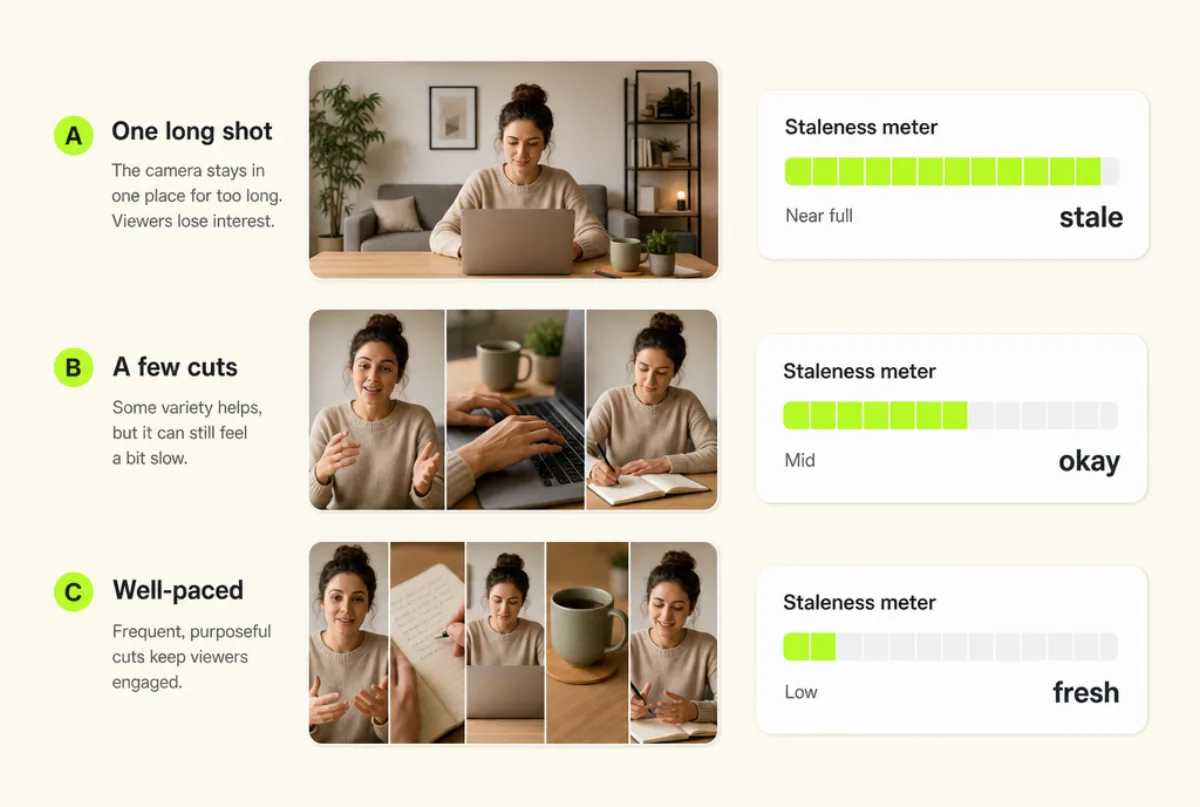 The same footage, paced three ways. A cut is only worth its jolt when the previous beat was about to go stale.
⚠️ The two ways pacing fails
Pacing fails in both directions, and the two failures feel nothing alike.
| Failure | What it looks like | What the viewer feels | Quick fix |
|---|---|---|---|
| Too slow | Long static holds, dead air, a point that already landed | Boredom — attention drifts, then leaves | Trim the held shot |
| Too fast | Cuts faster than the eye can resolve each frame | Exhaustion — nothing lands, reads as a blur | Let a beat breathe |
Too slow is the more common death — and the easiest to miss in your own edit, because you already know what's coming.
A held-too-long shot is the first thing to suspect when an attention curve sags in the middle.
Too fast is the over-correction. When cuts arrive faster than the eye can resolve them, no moment lands.
Frantic is tiring, and tiring makes people leave.
The target is neither maximum speed nor comfortable slowness. Cut just before the current beat goes stale — and not before.
Where that moment lands depends on the beat: a surprising reveal goes stale slowly, a held reaction fast, a line of dialogue the instant its meaning lands.
That's why "cut every X seconds" numbers are a loose sanity check, never a target.
✂️ Rhythm, not a metronome
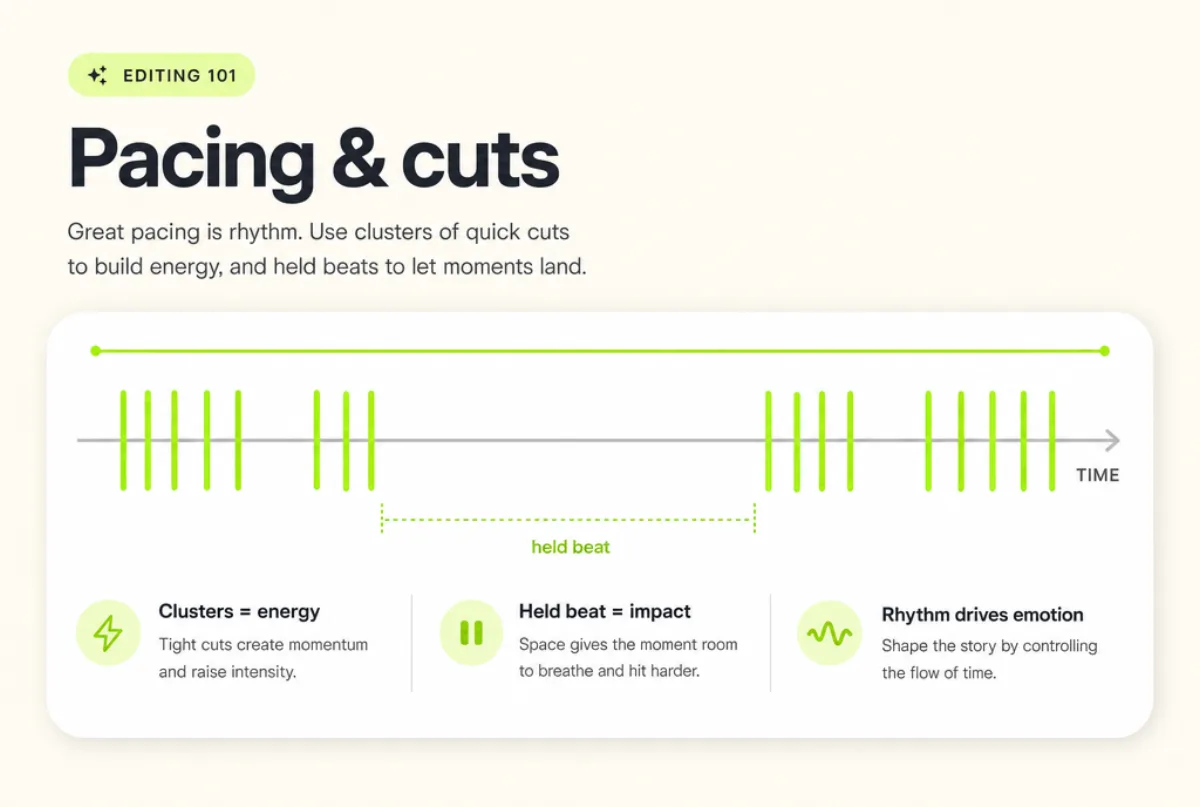
The second half of good pacing is variation. A cut exactly every two seconds becomes its own dead spot — evenness is predictable, and predictable is ignorable.
Good pacing breathes: speed up to build energy, slow down to land a key moment, then move again. A held beat carries weight only because the cuts around it were quick.
Drop the same slow moment into an already-slow stretch and it's just more slow.
Working principles:
- Cut on the death of a beat, not on a clock. A shot becomes a candidate to cut the moment it's spent its information or energy.
- Earn your pauses. A held moment lands when it follows faster ones. After other slow beats, it's a sag.
- Match pace to content, not to a trend. A reveal wants quick cutting; a real emotional beat wants room.
- Break your own pattern on purpose. If you can predict your next cut, so can the viewer.
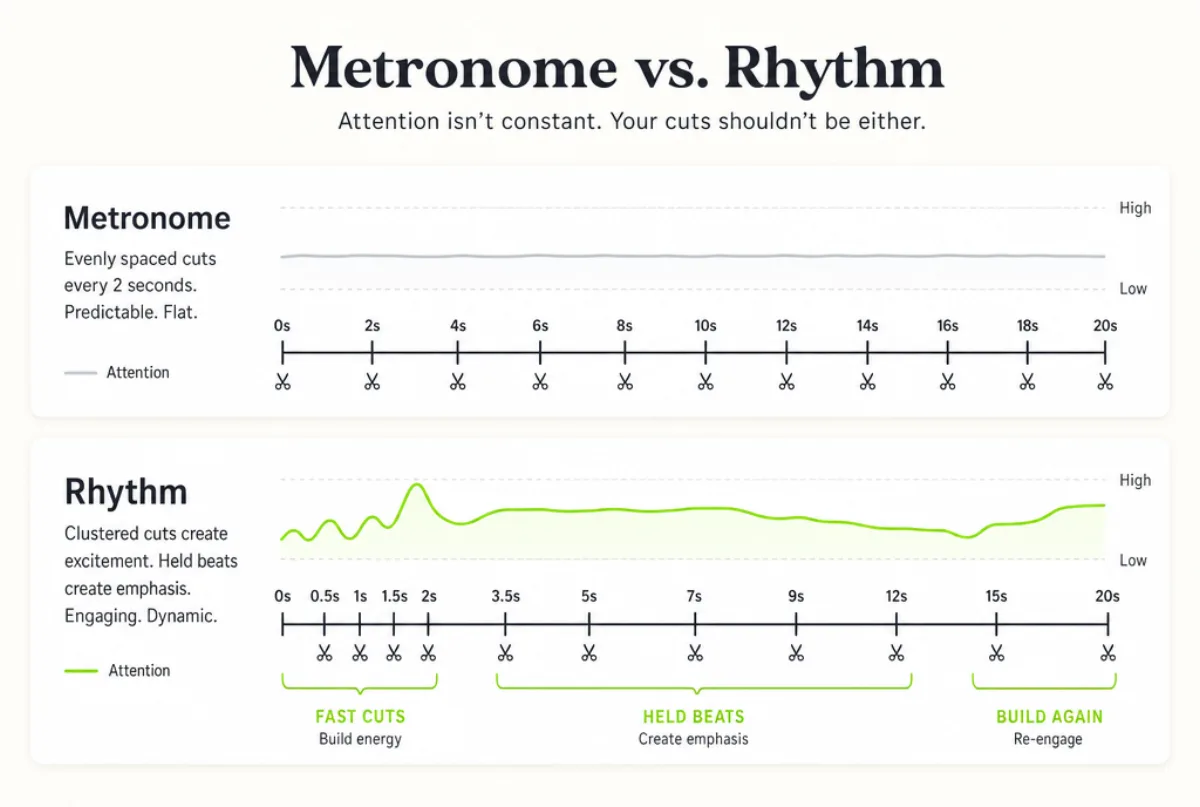 Two edits, same runtime. The even one flattens; the varied one holds — a held beat only lands when fast cuts set it up.
🎯 Pacing is a hook tool, not just a middle problem
Pacing starts in the first frame — and that's where it's most powerful. An early cut delivers a reset of attention at exactly the moment the thumb-stop decision is being made.
A fast first cut stacks a change on top of your opening claim — giving a hesitating viewer a second reason to stay before the first has finished registering. That's why it tends to register as a positive signal in hook analysis.
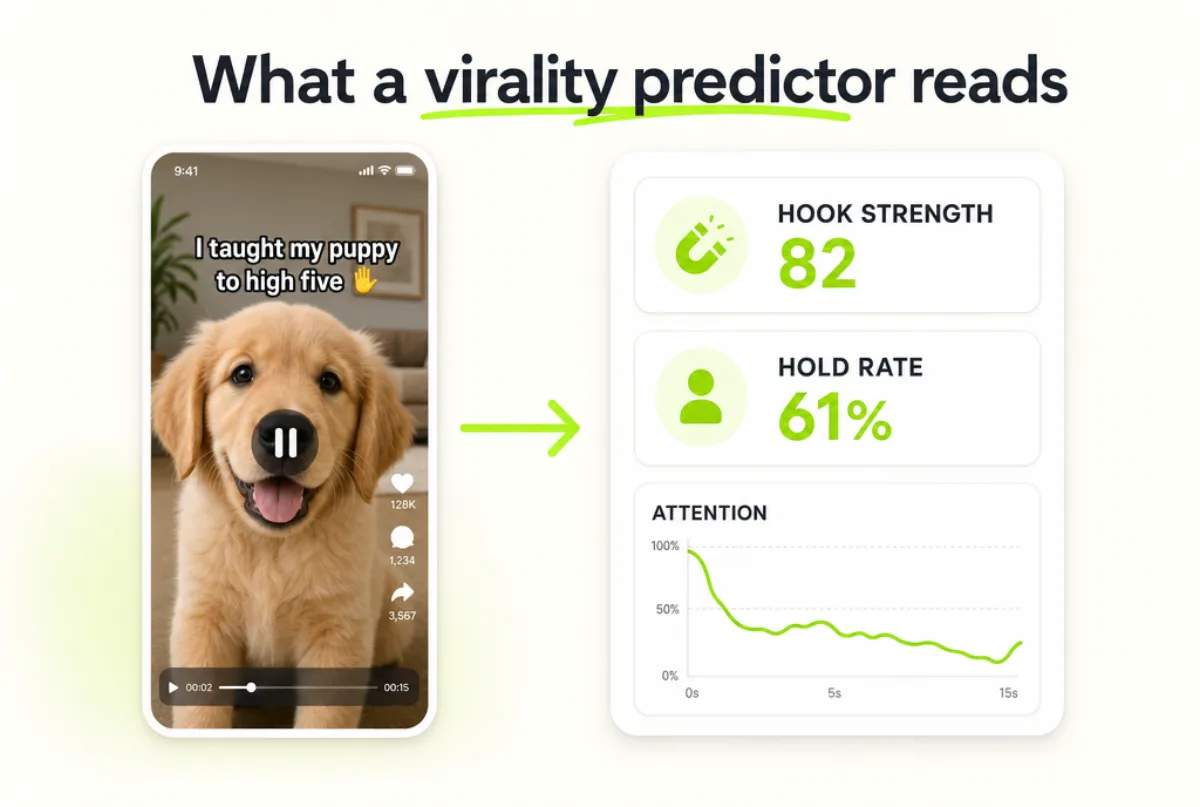
But the hook is only half the job. Stopping the scroll and keeping someone watching are two different skills — the gap between hook and hold.
A video can have a great opening cut and still die at second nine if the rhythm goes metronomic right after.
When fixing a weak open, a single well-placed early cut often does more than rewriting the line.
👁️ Pacing only works if the frame is readable
A cut resets attention only if the eye can actually find the new subject. That's composition, not timing.
If the new shot is cluttered or the focal point sits where the eye wasn't looking, the viewer burns the first half-second hunting — and you've spent the re-engagement the cut was meant to buy.
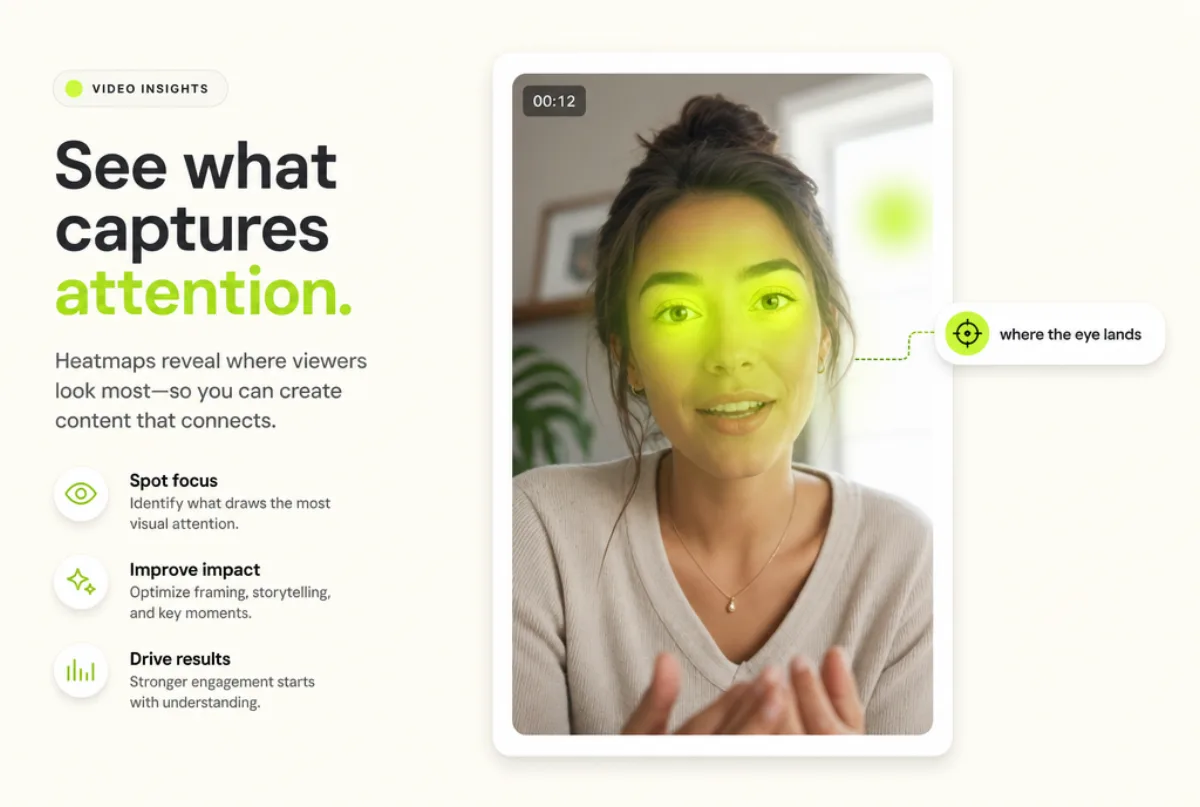
This is where pacing meets visual saliency:
- ✅ Cut to the part of the frame that pulls the eye → the reset is instant.
- ❌ Cut to a frame where the salient point fights the subject → the reset stutters.
When fast pacing feels frantic instead of energetic, mismatched framing across cuts is often the hidden cause — not the speed itself.
🔊 How pacing reads across platforms
The same edit doesn't behave identically on TikTok, Reels, and Shorts. We go deeper in whether the same hook works everywhere, but the pacing-specific points:
- The feed sets the contrast. Your pace is judged against what the viewer just watched. A rapid-fire surface makes a moderate pace feel slow.
- Audience intent shifts the sweet spot. Viewers there for information tolerate — and often prefer — slower, confident pacing; overediting tires them.
- Sound changes the math. With sound on, audio carries part of the pacing load — a beat drop can reset attention without a visual cut. Muted, the cut does all of it.
There is no single correct pace. Anyone handing you one number for all three platforms is selling simplicity, not accuracy.
📈 How to find the beats where pacing failed
Reading your own pacing is hard because you have prior knowledge — you know every shot, so nothing feels slow to you. The viewer has none of that.
That's the single biggest reason creators under-detect their own dead beats.When Scrollproof analyzes a clip, it uses computer vision to detect where hard cuts land and how fast they come. That feeds two reads at once:
- The hook read — does a cut land fast at the open, where it matters most?
- The attention curve — are there long, cut-free stretches where the predicted line goes flat?
The strongest signal is when the two reads agree: a flat stretch on the curve and a wide gap in the cut timeline, at the same timestamp, are the same dead beat seen twice.
It deliberately does not hand you a "correct" cuts-per-second number, because there isn't one.
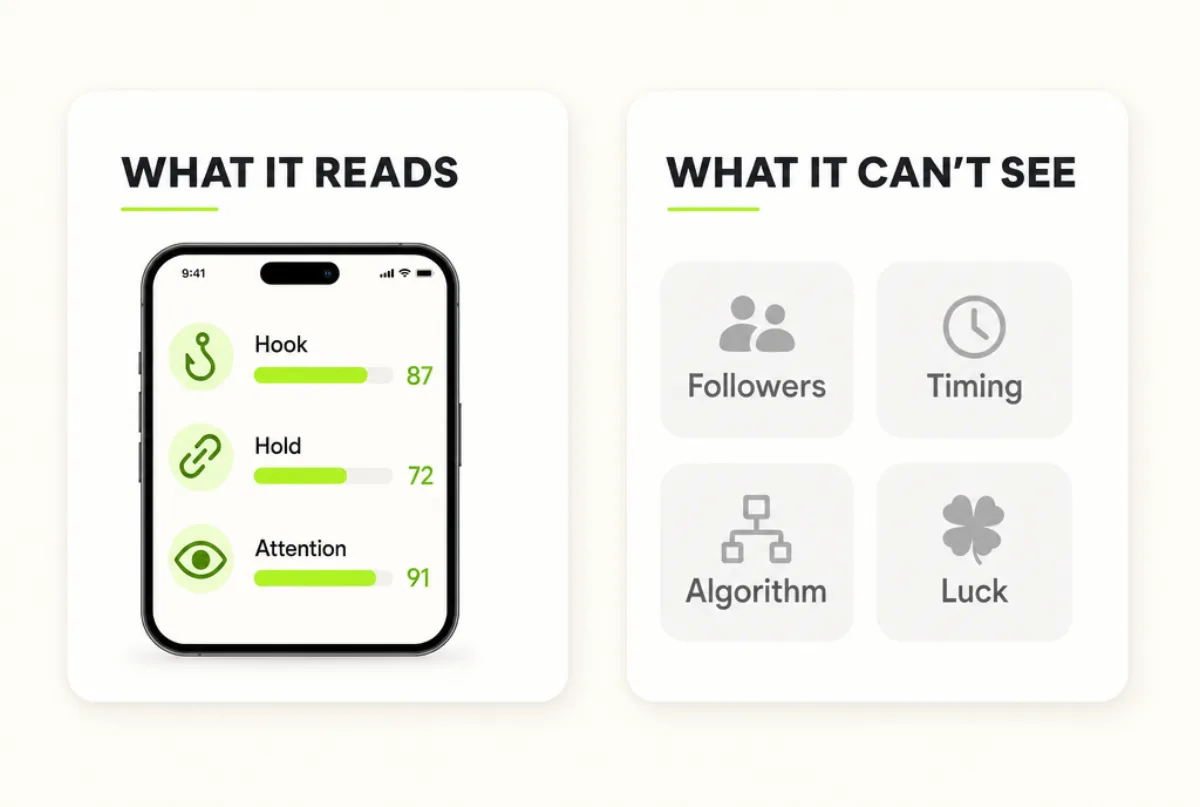
A virality score is a diagnostic, not a verdict: it tells you where to look — you decide what the beat needs.
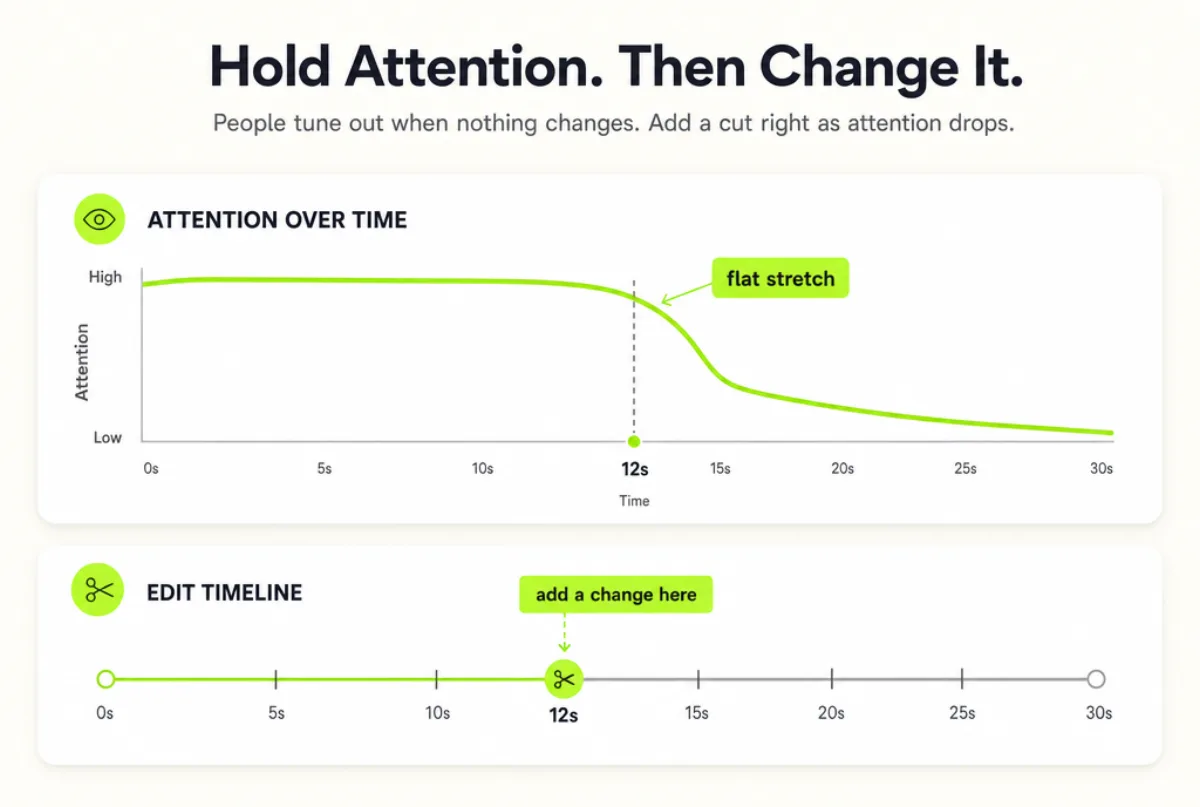 When a flat patch on the curve lines up with a gap in the cut timeline, you've found a real dead beat — not a guess.
Do this before you publish. Catching a dead beat in a pre-publish testing pass costs a 5-second re-trim; catching it from your published retention graph costs the video.
✅ A quick pacing checklist
Run a clip against these before it goes out. They're judgments, not numbers — because pacing is a judgment.
- Is there a change in the first beat? A cut, motion, or reframe while the viewer is still deciding to stay.
- Does any shot hold past the point it stopped saying something? That's your most likely dead beat. Trim it first.
- Is the rhythm varied, or a metronome? If you can tap out your own cut pattern, so can the viewer.
- Does every pause feel earned? A held beat should follow faster ones and carry weight.
- Can the eye find the subject in each new shot instantly? If not, you paid for the cut and got nothing back.
- Does the pace fit the audience and surface — not just last week's trend?
Get the rhythm right and a viewer leans in without noticing why. Get it wrong in either direction and they leave without being able to say what was off.
Your job is to find those beats before they do.
Frequently Asked Questions
How often should I cut in a short-form video?
There's no universal number. Cut just before the current beat goes stale — which depends on the beat.
A surprising reveal can hold for seconds; a line of dialogue should cut the moment its meaning lands. Treat "cut every X seconds" figures as a loose sanity check, never a target.
Is faster pacing always better for retention?
No. Too slow bores and dips the attention curve; too fast exhausts — cuts arriving faster than the eye can resolve mean nothing lands.
The goal isn't speed, it's attentiveness — resetting attention right as it's about to drift, no sooner.
What's wrong with cutting at an even, steady rhythm?
Evenness is predictable, and predictable is ignorable. A metronomic edit flattens into its own dead spot even while the frames keep changing.
Good pacing varies, and a held beat only carries weight because the cuts around it were quick.
Does pacing affect the hook, or just the middle?
Both — and the hook is where it's most powerful. An early cut resets attention right as the viewer decides whether to stay.
But stopping the scroll and keeping someone watching are different jobs; a great opening cut can still die seconds later if the rhythm goes flat.
Can a tool tell me if my pacing is right?
A tool shows you where to look, not what's "correct." Scrollproof detects where your cuts land and lines them up against a predicted attention curve.
When a flat stretch matches a gap in the cut timeline, you've found a real dead beat. What it needs — a trim, a reframe, an earlier cut — is your call.
Want to see where your edit stalls or thrashes before you publish? Scan one free and Scrollproof maps your cuts against a predicted attention curve.
Stop guessing. Scan the clip.
Drop a short video and get Hook Strength, Hold Rate, a second-by-second attention curve, and a real attention heatmap — in about a minute. First scans are free.